

Every Plastic on Your Desk Is the Same Trick Played Nine Ways
A chemistry teacher’s guide to plastics, polymers and everyday materials: how the chains are built, what the recycling numbers mean, and why it matters.
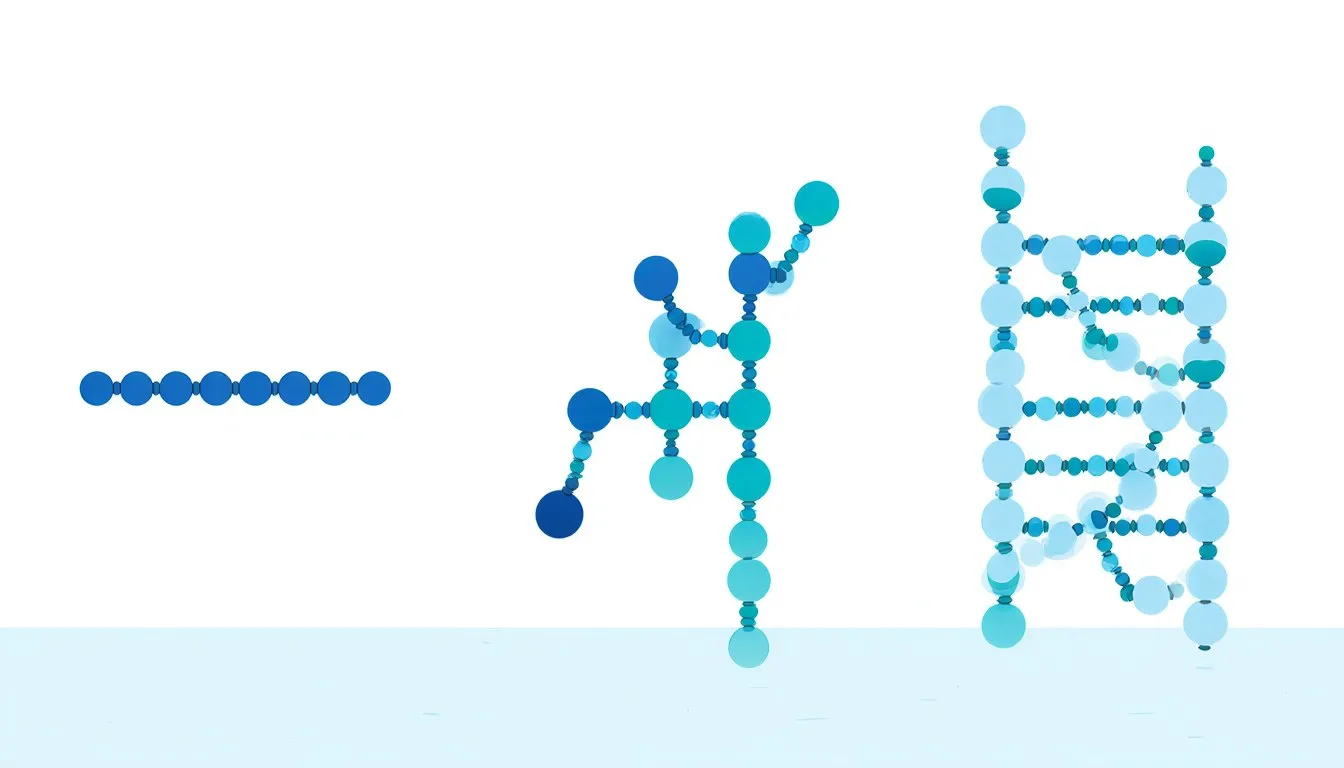
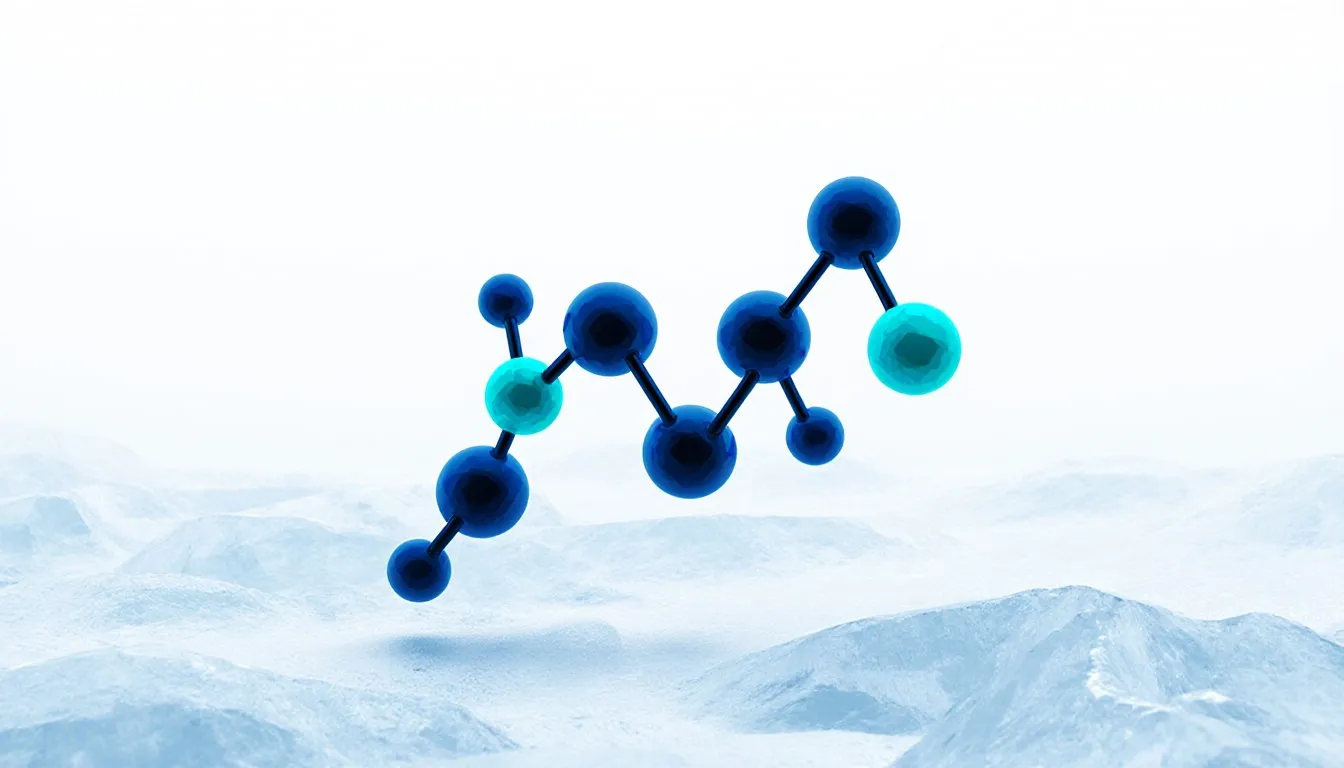
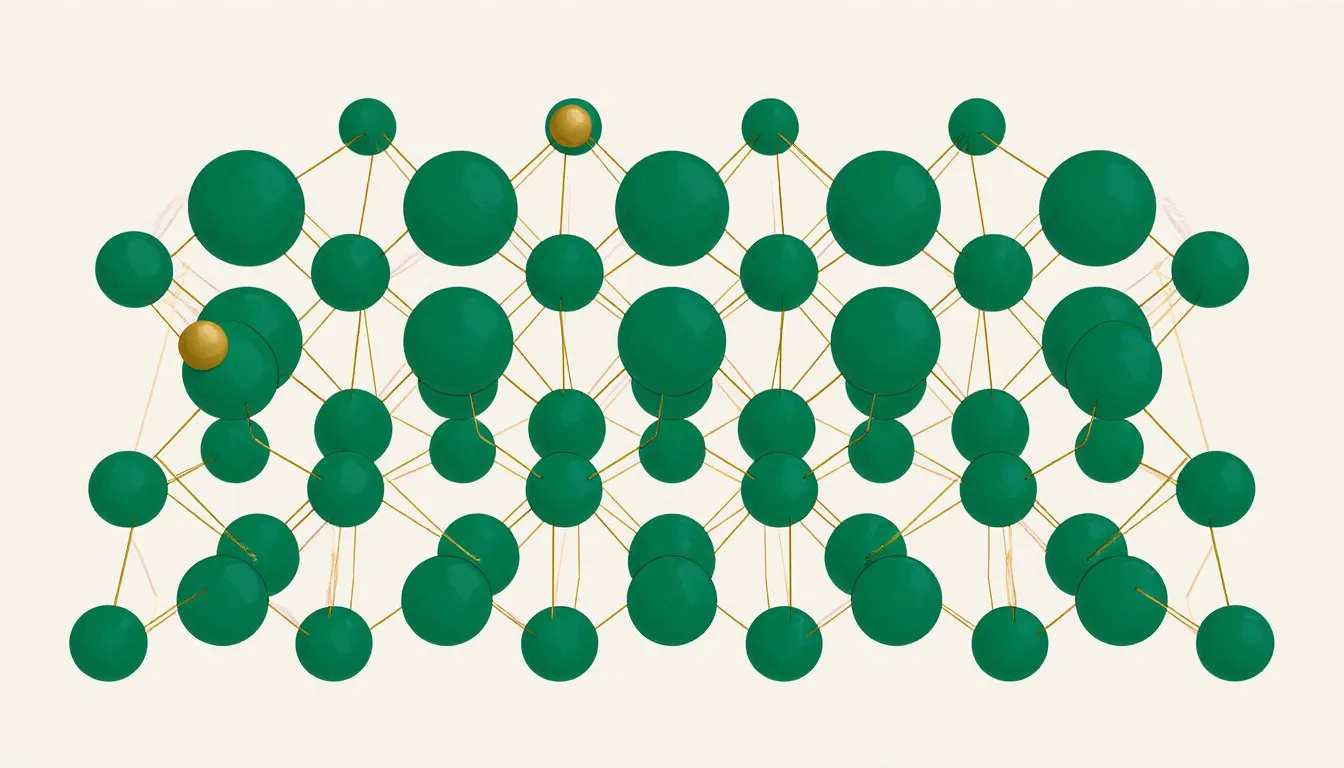
Pick up a milk jug, a raincoat, and a bike helmet, and you are holding three versions of the same molecular idea: a very long chain of small units snapped together end to end, over and over, thousands of times. That chain is what a polymer is. Everything that separates the jug from the helmet comes down to three things: which small unit got repeated, how tightly the chains pack against each other, and whether anyone welded them together sideways. Floppy or rigid, melting or charring, going cloudy in the dishwasher: those behaviours all trace back to the same three choices. The chain is the material, and almost every question you can ask about a plastic turns out to be a question about that chain and what was done to it afterwards.
Once you can see the chain, the aisle of a hardware store rearranges itself. This is the map: how polymer chains get built, why some soften on a stove burner and others sit there and blacken, which plastics you actually handle in a day, what the little numbered triangles do and do not promise, and which polymers were here long before any chemist showed up.
What actually makes something a polymer?
A polymer is a molecule built by repeating one small unit, called a monomer, until the result is enormous. The prefix is Greek: poly, many, meros, parts. The simplest honest picture is a paper chain. One loop is a monomer. A thousand loops linked in a row is the polymer. Nothing about the loop changed; the length changed everything. The picture fails as soon as you pull on it, because paper loops merely hook through each other, while the links in a real chain are covalent bonds, the strongest connection in the molecule.
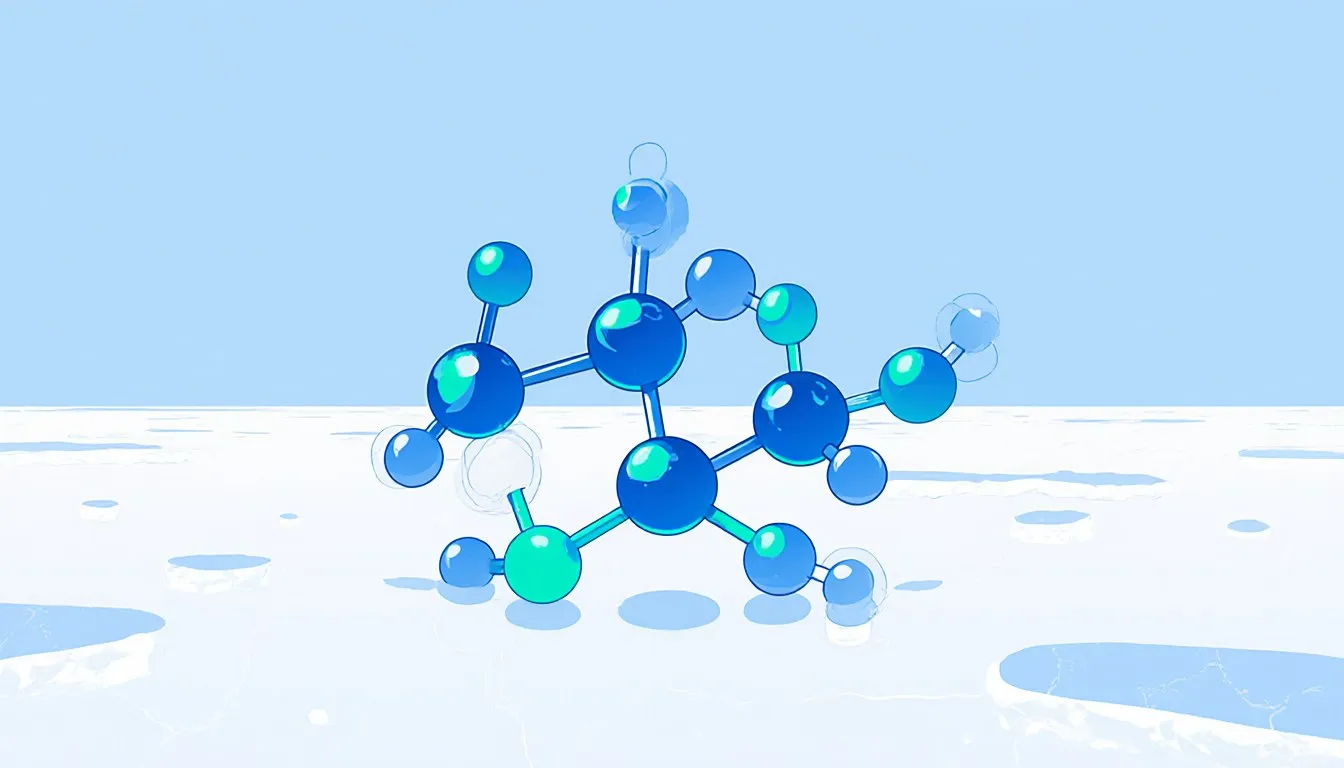
Take polyethylene, the plastic in a grocery bag and a milk jug and the squeezy bottle of dish soap. Its monomer is ethylene, C2H4, two carbon atoms joined by a double bond with two hydrogens on each. That double bond is the whole story. A double bond is a spring under tension: it holds more energy than a single bond, and it would rather be two single bonds reaching out to neighbors. The spring picture goes only that far, since nothing in the molecule recoils. The double bond simply sits at a higher energy than the pair of single bonds it can become. Give it the right conditions and each ethylene molecule opens up, grabs the one next to it, and passes the reactivity down the line. What you end up with is a chain of carbon atoms, each carrying two hydrogens, running to lengths of thousands or tens of thousands of repeats.
Here is the part students always find unsatisfying, and it is worth sitting with. Polyethylene is chemically almost nothing. Carbon and hydrogen, single bonds, no interesting functional groups, the sort of molecule that would get you a shrug in an organic chemistry class. And yet it is one of the highest-volume manufactured materials on the planet. Everything useful about it comes from two things: the length of the chains and the geometry of how they pack.
Length matters because long chains tangle. Short hydrocarbon chains are gasoline, then oil, then wax, and then, past a certain length, the chains snarl into each other so thoroughly that pulling them apart takes real force. That force is what you feel when you try to tear a plastic bag against its grain and it stretches instead of splitting. Tearing a bag drags the chains past one another, and the carbon backbone comes through it intact.
Geometry matters because chains that are straight and even can stack together in ordered regions. Chains with branches sticking off them cannot. Picture uncooked spaghetti packing neatly in a box, then drop the picture one step further on: real chains are thousands of times longer relative to their width, and they never all line up at once, so even the tidiest plastic is only partly ordered. Ordered regions make a plastic stiff, dense, and opaque. Disordered ones make it soft, floppy, and clearer. Same molecule, same formula, radically different material. That single distinction is why a milk jug holds its shape and a sandwich bag does not, and it is worth a fuller look than it gets here if you want the mechanism in detail; a side-by-side look at LDPE vs HDPE tells exactly that story.
One more definition, because it will save you confusion later. “Plastic” and “polymer” are not synonyms. Every plastic is a polymer, but plenty of polymers are not plastics: your hair, the cotton in your shirt, the DNA in every cell you have, and the starch in a potato are all polymers. Plastic is the subset we can soften and shape. The word comes from the same root as “plasticity,” the property of deforming without snapping back, which is a description of behavior, not of composition.
Addition or condensation: the two ways a chain gets built
There are two main routes from monomer to polymer, and knowing which one a material came from tells you a surprising amount about how it behaves and how it fails.
Addition polymerization is the ethylene story above. A monomer with a carbon-carbon double bond opens up and adds itself to the growing chain. Nothing is left over. Every atom that went in comes out in the product, which makes it beautifully efficient on paper and is one reason these plastics are cheap. The reaction runs as a chain reaction: something reactive starts it, each addition creates a new reactive end, and the chain grows fast until two growing ends meet and quench each other.
The family that comes out of addition polymerization is large, and its members differ only by what hangs off the double bond you started with:
- Ethylene, with nothing extra, gives polyethylene: bags, bottles, buckets.
- Propylene, with a methyl group hanging off, gives polypropylene: yogurt tubs, bottle caps, the hinge on a flip-top box.
- Styrene, with a benzene ring hanging off, gives polystyrene: disposable cups, CD cases, foam packaging.
- Vinyl chloride, with a chlorine hanging off, gives polyvinyl chloride: pipes, window frames, wire insulation.
- Tetrafluoroethylene, with fluorines all round, gives PTFE: nonstick pans, plumber’s tape.
Look at that list as a chemist would. The backbone is identical in all five. Every difference in the finished material traces back to that one dangling group. Glass-clear or milky, rigid or waxy, clean-burning or acrid: it all depends on the side group, and on how the neighboring chains get along because of it. A chlorine atom is bulky and polar, so PVC chains attract each other strongly and the material comes out hard. A benzene ring is bulky and stiff, so polystyrene chains cannot slide or coil easily and the material comes out glassy and brittle. The pattern holds well enough that you can predict material behavior from a monomer sketch, which is the closest thing to a magic trick that a chemistry classroom offers.
Condensation polymerization works differently. Here two different monomers, each with a reactive group at both ends, join and kick out a small molecule as they do, usually water. The name comes from that expelled droplet. Because a small molecule leaves, the polymer weighs less than the sum of the monomers, and unlike addition, this reaction does not need a double bond to open. It needs matched partners: an acid group meeting an alcohol group, or an acid group meeting an amine group.
PET, the plastic in a water bottle, comes from a diacid and a diol condensing into an ester link, repeated. Its full name, polyethylene terephthalate, spells out both partners. Nylon comes from a diacid and a diamine condensing into an amide link, and the amide link is exactly the same bond that joins amino acids into proteins. Wallace Carothers’ team at DuPont produced nylon in the 1930s, and the deep symmetry is that silk had been running the same chemistry for millions of years. Nature got to the amide backbone first; the lab arrived and found the seat taken.
Condensation polymers carry a vulnerability their addition cousins lack. The ester and amide links they are built on can be broken by water, given heat and time and the right pH, which is the reverse of the reaction that made them. This is why PET has to be dried thoroughly before it is melted and reprocessed: wet PET, run hot, hydrolyzes back toward shorter chains and comes out weak and brittle. It also explains why polyester fabric survives your washing machine perfectly well at 40 °C (104 °F) and would not survive boiling caustic. Room temperature is nowhere near enough. The bond can be broken, but you have to work at it.
Why some plastics melt and others don’t
Put a plastic spoon on a hot pan and it slumps. Put a saucepan handle on the same burner and it scorches, blackens, and keeps its shape to the end. Both are polymers. The difference is whether the chains are merely tangled or actually bonded to each other.
In a thermoplastic, the chains are separate molecules lying against each other, held by weak intermolecular attractions. Heat gives those chains energy to wiggle, the weak attractions let go, the chains start to slide, and the solid becomes a viscous liquid. Cool it and the attractions reform wherever the chains happen to be. Nothing was destroyed, which means you can do it again. Every plastic named so far is a thermoplastic, and that reversibility is the entire basis of mechanical recycling.
In a thermoset, the chains are chemically bonded to one another at intervals, cross-linked, so the whole object is effectively one gigantic covalently connected molecule. There is nothing to slide. Add heat and the chains cannot move past each other no matter how much energy you supply, so the material stays put until you reach a temperature high enough to break covalent bonds outright, at which point it decomposes. Keep pushing and it chars, then burns, at a temperature set by the weakest covalent bond in the network, which is why a thermoset is rated by the point at which it starts to char.
Leo Baekeland made the first fully synthetic thermoset, Bakelite, in 1907, from phenol and formaldehyde, and the timing is not a coincidence. Early electrical equipment needed an insulator that would not soften near a hot terminal, and cross-linking answered the problem exactly. Bakelite radio cases and switch plates survive in antique shops in usable condition more than a century on, which tells you something about cross-linked networks that no spec sheet quite conveys.
The trade is straightforward and you can see it in any workshop. Thermoplastics are reprocessable and forgiving; thermosets are heat-resistant, chemically tough, and permanent. A two-part epoxy, cured fiberglass, vulcanized tire rubber, and the melamine of a picnic plate are all thermosets, and none of them can be melted down and made into something else. The full mechanism, including what cross-link density does to hardness and why some cured resins are rubbery while others are glass-brittle, is a topic in its own right, and the difference between thermoplastics and thermosets covers that ground properly.
The plastics you actually touch every day
Nine polymer families account for most of what passes through your hands in a day. Here is the tour, each tied to an object you can go find right now.
Polyethylene, in its two personalities
Low-density polyethylene, LDPE, has branches sprouting off the main chain that hold the chains apart and keep them from packing. The result is soft, flexible, and translucent: sandwich bags, squeeze bottles, the film wrapped around a pallet, the thin liner inside a cereal box. High-density polyethylene, HDPE, is the same monomer polymerized under conditions that leave the chains largely unbranched, so they stack into ordered regions and the material comes out stiff, waxy to the touch, and opaque. Milk jugs, detergent bottles, cutting boards, playground equipment. Same formula. Different branching. It is the clearest example I know of structure beating composition, and the full breakdown lives in everything you need to know about ldpe plastic.
Polypropylene
Polypropylene is the quiet workhorse. It has a higher melting point than polyethylene, roughly in the 160 °C region for the ordered grades, which is why it is the plastic of microwave-safe containers and the reason a yogurt tub survives a dishwasher that would warp a colder-melting plastic. Its signature trick is the living hinge: bend a thin strip of polypropylene back and forth and, instead of fatiguing and snapping, the chains in the bend line up and it gets stronger there. That is why flip-top caps on shampoo bottles and the hinge on a tackle box are almost always polypropylene. Check the underside of the lid; you will usually find a 5.
Polyethylene terephthalate
PET is the clear, tough, gas-tight plastic of drink bottles. The benzene rings in its backbone are flat and stiff, which stops chains from coiling loosely and makes the material rigid and dimensionally stable. Blow-molding stretches those chains in two directions at once, aligning them, which is what makes a fizzy-drink bottle strong enough to hold pressure while weighing almost nothing. PET is also the most successfully recycled plastic in most collection systems, for straightforward reasons of chemistry: it is easy to identify, it is usually collected clean, and it melts and reforms without much loss when it has been dried properly first.
Polyvinyl chloride
PVC is a shape-shifter, and it is worth understanding why. Pure PVC is hard and rather brittle. Add plasticizers, small molecules that wedge between chains and let them slide, and the same polymer becomes soft and rubbery. Rigid PVC is drainpipes and window frames; plasticized PVC is garden hose, inflatable pool toys, and the coating on electrical wire. The plasticizer is not chemically bonded to the polymer, only mixed in, which is why old vinyl goes stiff and cracks over decades as the plasticizer migrates out. That new-shower-curtain smell is plasticizer leaving. PVC also carries a chlorine on every second carbon, which makes it flame-retardant in use but means it must never be burned in the open or in a home fire pit: burning it releases hydrogen chloride and a range of other products you do not want in your lungs.
Polystyrene
Polystyrene in its solid form is the glass-clear, click-when-you-tap-it plastic of CD cases and disposable cutlery, brittle because those bulky benzene rings stop the chains from absorbing a shock by flexing. Blow gas into it during processing and you get expanded polystyrene foam, which is about 95 percent air by volume and gets its insulating power from that trapped, still air rather than from the polymer itself. That is the same principle as a down jacket, and it stops being the same principle the moment you squeeze: down lofts back up after compression, while the crushed cells of a foam cup stay crushed and never insulate as well again. The polymer is only the scaffolding holding the air still. The detailed picture of what those rings do to the material’s stiffness, clarity, and heat behavior is set out in polystyrene properties.
Polycarbonate
Polycarbonate is the tough, optically clear engineering plastic of safety glasses, machine guards, riot shields, and headlamp lenses. Its remarkable property is impact resistance: it can absorb a blow that would shatter acrylic or glass, because its chains can deform locally and dissipate the energy instead of propagating a crack. In a school lab this is the difference between spectacles that stop a flying shard and spectacles that become the shard. Acrylic looks similar on a shelf and behaves very differently under a hammer, and how is polycarbonate different from acrylic plastic sorts out which one belongs where.
Polyamides
Nylon and its relatives get their strength from hydrogen bonds. The amide links along the backbone let neighboring chains grip each other at regular intervals, an attraction far stronger than what holds polyethylene chains together, and the result is a family of materials that are strong, abrasion-resistant, and slippery enough to make good gears and bearings. Toothbrush bristles, climbing rope, carpet fiber, cable ties, the gear inside a cheap kitchen appliance. The trade-off is that those same polar amide groups attract water, so nylon absorbs moisture from humid air and swells and softens slightly as it does, which any engineer specifying a nylon part has to account for. The variations across the family are real and consequential, and types of polyamides and their applications maps them out.
What do the little triangle numbers on plastic actually mean?
The number in the triangle identifies which polymer the item is made from. That is all it does. It is not a promise that your local facility accepts it, and the triangle of chasing arrows around it is not a claim that the item will be recycled. This is probably the single most widespread misunderstanding about plastics, and it is not the public’s fault: the symbol borrowed the visual language of recycling to do a job of chemical labeling.
The system was introduced in 1988 by the Society of the Plastics Industry, and its purpose was sorting. A worker or a machine on a sorting line needs to know quickly whether a bottle is PET or HDPE, because mixing polymer types ruins a melt. The codes:
- 1, PET or PETE: polyethylene terephthalate. Drink bottles, salad boxes, polyester fiber. Widely collected.
- 2, HDPE: high-density polyethylene. Milk jugs, detergent bottles, shampoo bottles. Widely collected.
- 3, PVC or V: polyvinyl chloride. Pipe, some blister packaging, garden hose. Rarely collected in household systems; its chlorine contaminates other polymer streams if it slips through.
- 4, LDPE: low-density polyethylene. Bags, films, squeeze bottles, bread bags. Usually not accepted in kerbside bins because thin film wraps around sorting machinery, though many supermarkets run separate film collection points.
- 5, PP: polypropylene. Tubs, caps, straws, medicine bottles. Increasingly accepted, though this varies a great deal by area.
- 6, PS: polystyrene. Foam packaging, disposable cups and cutlery. Seldom collected. Foam is mostly air, so transporting it costs more than the recovered polymer is worth.
- 7, Other: everything else, including polycarbonate, nylon, acrylic, bioplastics such as PLA, and multi-layer laminates. A 7 tells you only what the item is not.
Two things follow from reading that list carefully. First, the numbers are not a ranking. A 6 is not worse chemistry than a 1; it is a different polymer with a different economic fate. Second, the 7 category is a mixed bag by design, which matters because a compostable PLA cup and a polycarbonate lens share a number while sharing almost nothing else.
The practical rule, and the one worth passing on to a class: the number tells you the polymer, and your local waste authority tells you the destination. Both pieces of information are needed and only one of them is printed on the object.
Not all polymers come from a factory
Long before anyone cracked ethylene, the natural world had been running polymer chemistry at scale, and four examples make the point.
Cellulose is the most abundant organic polymer on Earth. It is a chain of glucose units, and it is what wood, cotton, paper, and the crisp snap of a celery stalk are made of. The glucose units link in a configuration that lets the chains lie flat and hydrogen-bond into sheets, which is why cellulose is strong and fibrous and utterly insoluble in water despite being built entirely from sugar.
Starch is also a chain of glucose. Same monomer. The linkage between units is oriented differently, which makes the chain coil into a helix instead of lying flat, and the whole material becomes soft, digestible, and water-swellable. Cellulose and starch are the best example in all of chemistry of geometry beating composition: identical building blocks, one you can eat and one you cannot, and the difference lives entirely in the angle of a single bond. Your gut lacks the enzyme to hydrolyze the cellulose linkage. A cow’s rumen hosts microbes that can, which is why a cow can live on grass and you cannot.
Natural rubber is polyisoprene, tapped as a milky latex from Hevea brasiliensis. Raw, it is disappointing stuff: sticky when warm, brittle when cold. Charles Goodyear’s vulcanization in the 1830s and 40s solved that by heating rubber with sulfur, which forms sulfur bridges between chains. Those bridges are cross-links, and vulcanized rubber is a thermoset, which is why a tire cannot be melted down and reformed the way a bottle can. Natural rubber is one of the few polymers where you can watch a material go from useless to indispensable through one chemical step.
Silk is a protein, which means a polyamide, which means the same backbone chemistry as nylon. Silk’s strength comes from long stretches of small amino acids that let neighboring chains pack into tight, hydrogen-bonded sheets. Wool, hair, and horn are proteins too, with more sulfur cross-links in them, which is exactly why a permanent wave works: the process breaks and reforms disulfide bridges between keratin chains.
The traffic runs in both directions these days. Synthetic chemistry has spent a century imitating natural polymers, and the newer wave goes the other way, building materials from plant sources to replace synthetics. Leathers made from mycelium, pineapple leaf fiber, and cactus are the visible edge of that effort, and if the material science behind them interests you, vegetable leather goes into how those are actually built and where they hold up.
Beyond plastic: other everyday materials built the same way
Once you are looking for chains, you find them well outside the plastics aisle.
Resins and their cured forms. The polyester resin in a fiberglass repair kit arrives as a syrup of short polymer chains with reactive double bonds still along them, plus a monomer such as styrene keeping it liquid. Add the hardener and those double bonds open and cross-link, turning the syrup into a rigid thermoset network within minutes. The heat you feel through the mixing cup is the reaction itself; polymerization releases energy, and a large batch mixed in a deep container can get hot enough to smoke and warp. Mix small batches in a wide, shallow container, with real ventilation, and follow the manufacturer’s ratio precisely. The full working detail is in polyester resin. Epoxies work on the same principle with a different chemistry, and both cure by building a network rather than by drying.
Adhesives. Nearly every glue is a polymer story of one kind or another. White wood glue is polyvinyl acetate suspended in water: the water leaves, the polymer particles coalesce, and a solid film remains. Superglue is a cyanoacrylate monomer that polymerizes in seconds when it meets the trace moisture on almost any surface, which is why it bonds fingers so enthusiastically. Hot glue is a thermoplastic melted and allowed to re-solidify. Three different mechanisms, one family of molecules, and if the ingredient side interests you, glue ingredients breaks the formulations down.
Silicones. These are the family that breaks the pattern in an instructive way. A silicone backbone is not carbon at all: it alternates silicon and oxygen atoms, with organic groups hanging off the silicon. That Si-O bond is stronger and more thermally stable than a C-C bond, which is why silicone bakeware goes in a hot oven and stays flexible, why silicone sealant survives a decade of sun on a window frame, and why silicone lubricants keep working across a wide temperature range where hydrocarbon oils would thin out or gum up. It is a good reminder that the polymer principle, repeat a unit until it becomes a material, is not a carbon-only idea. Where those properties get put to work is covered in uses of silicone grease.
The lesson to take from this section is that “plastic” is a small, visible slice of a much larger category. Paint binders, the coating on non-stick pans, the elastane in stretchy clothing, the acrylic in a bathtub, the polyurethane foam in the sofa you are sitting on: all chains, all built from the same handful of reactions.
Are the plastics around your kitchen actually safe?
The honest answer separates two things that often get blurred: the polymer, and everything else in the object.
Polymer chains themselves are large, inert, and essentially unabsorbable. A polyethylene molecule is far too big to cross a cell membrane, and it has no reactive chemistry to speak of. The legitimate questions are about the smaller molecules that ride along: leftover unreacted monomer, plasticizers, stabilizers, colorants, and processing aids. Those are small enough to migrate out of the plastic and into what it is touching, and migration goes up with heat, with fat content, and with time.
Two additive families draw the most attention, and both are real subjects of regulatory attention rather than internet folklore.
Bisphenol A is a starting material for polycarbonate and for some epoxy can linings. Trace amounts can migrate from polycarbonate, and migration increases with heat and with repeated washing at high temperature that degrades the surface. Regulators in the European Union and elsewhere have restricted BPA in certain food-contact applications, notably infant feeding bottles, and many manufacturers reformulated. If a hard clear plastic item is old, scratched, cloudy, or repeatedly run through a hot dishwasher, its surface is degraded, and replacing it is the straightforward answer.
Phthalates are the plasticizers that make PVC soft. Because they are mixed in rather than bonded, they can migrate, and migration is faster into fatty foods and at higher temperatures. Several specific phthalates are restricted in food-contact and children’s products in various jurisdictions.
Here is where I stop and hand it over, because it is not my lane: what a given level of exposure means for a person’s health is a medical and toxicological question, and this article does not answer it. What I can give you is the physical chemistry and the conservative handling practice that follows from it.
- Heat drives migration. Microwaving food in a container not labelled for microwave use, or pouring boiling liquid into a plastic not rated for it, is the scenario where additive transfer is highest. Glass or ceramic sidesteps the question entirely.
- Fat is a better solvent for additives than water. Oily, hot food in plastic is the demanding case; cold water in a bottle is the undemanding one.
- Damage matters. A scratched, chalky, or crazed surface has vastly more area and a degraded structure. Retire it.
- Single-use means single-use. PET bottles are designed for one fill; they are hard to clean properly and their surface takes damage quickly.
- Follow the label, not a rule of thumb. “Microwave-safe” and “dishwasher-safe” are the manufacturer’s statement about the actual formulation, additives included, and no amount of knowing the polymer type substitutes for it.
Polypropylene and the polyethylenes carry the least additive burden as a class, being simple hydrocarbons that need little help to do their jobs, which is a good part of why they dominate food packaging. Softened PVC and older polycarbonate are the two categories where caution is best supported. And burning household plastic, in a stove, a fire pit, or a garden bonfire, is the one thing on this page that I will state flatly rather than hedge: do not. Incomplete combustion of mixed plastics produces a range of harmful products, and chlorinated plastics such as PVC are the worst offenders. Plastic goes in a bin, never on a fire.
Where does a plastic actually go when you recycle it?
Polymer type controls the destination, and the reasons are mechanical: what survives a melt, what a sorting line can pick out, and what a reprocessor can sell at the far end.
Mechanical recycling, the dominant method, means sorting by polymer, washing, shredding into flake, melting, and extruding into pellets. Every step in that sequence is chemistry-limited.
Sorting has to be near-perfect, because different polymers do not mix in the melt. They have different melting points and they are mutually insoluble at the molecular level, so a batch of HDPE contaminated with PP produces a material with weak boundaries between the two phases, and parts made from it fail at those boundaries. This is why a small amount of the wrong plastic ruins a large amount of the right one, and why sorting lines use density baths, infrared spectroscopy that reads the polymer’s own absorption fingerprint, and, still, human hands.
Melting degrades chains. Heat and mechanical shear break some chains and, in polymers with oxygen in the backbone, allow hydrolysis if any water is present. Shorter chains mean lower strength, so recycled material is usually a step down in performance from virgin material. That is why the same bottle rarely becomes the same bottle indefinitely and often becomes fiber, strapping, or a plastic lumber product instead. The technical name for this is cascading, and it is a limit set by the chains themselves.
Thermosets cannot be melted at all. A cured epoxy, a vulcanized tire, a fiberglass hull: the cross-links mean there is no melt state to return to. Recovery for these means grinding into filler, or breaking the network down chemically or thermally, both of which cost more energy than the recovered material is usually worth.
Additives ride along. Pigments cannot be removed in a melt, which is why clear PET is worth more than coloured PET and why a dark bottle can be invisible to the infrared sorters that look for reflected light. Multi-layer packaging, a film with a barrier layer laminated inside it, is a single object made of several polymers that cannot be separated economically, which is the honest reason so much flexible packaging goes to landfill or incineration despite carrying a number.
Chemical recycling, breaking polymers back into monomers or into feedstock, sidesteps the degradation problem, because monomer purified back to specification is genuinely as good as new. It works best on condensation polymers such as PET and nylon, whose ester and amide links are designed to come apart under the right conditions, and it is much harder on addition polymers such as polyethylene, whose all-carbon backbone has no weak point to attack. The chemistry is sound; the economics and the energy budget are where it gets argued about, and that argument is not settled.
So the practical answer to “where does it go” is: 1 and 2 have real markets and are usually genuinely recycled where they are collected; 5 increasingly so; 4 needs a separate film stream; 3, 6, and 7 mostly do not have a route in household collection, whatever the triangle implies. Clean and dry beats crushed and wet, because contamination causes more rejected loads than any other single factor.
Reading the material world
The habit outlasts the article. Pick up an unfamiliar object and there are three questions you can answer with your hands before you find any label: does it flex or crack, does it feel waxy or glassy, and does a warm radiator soften it at all. Those three answers narrow the polymer down surprisingly far.
Try this before you leave the room. Turn over three plastic objects near you and find their numbers, then predict which one you could stretch, which one would snap, and which one you could soften on a warm radiator. Then check the table above and see whether the polymer you found matches what your hands told you. Twenty-eight years of lab reports taught me that the students who got good at materials were never the ones who memorized the list; they were the ones who started flipping things over.
Nora Whitfield
Staff Writer
Nora Whitfield taught high-school chemistry and physics for twenty-eight years, and she has never once answered "when will I use this?" with a sigh. She believes any honest question about how the world works deserves an answer that is both correct and actually understandable.