
What is Bakelite Plastic? An Overview of its Properties and Uses
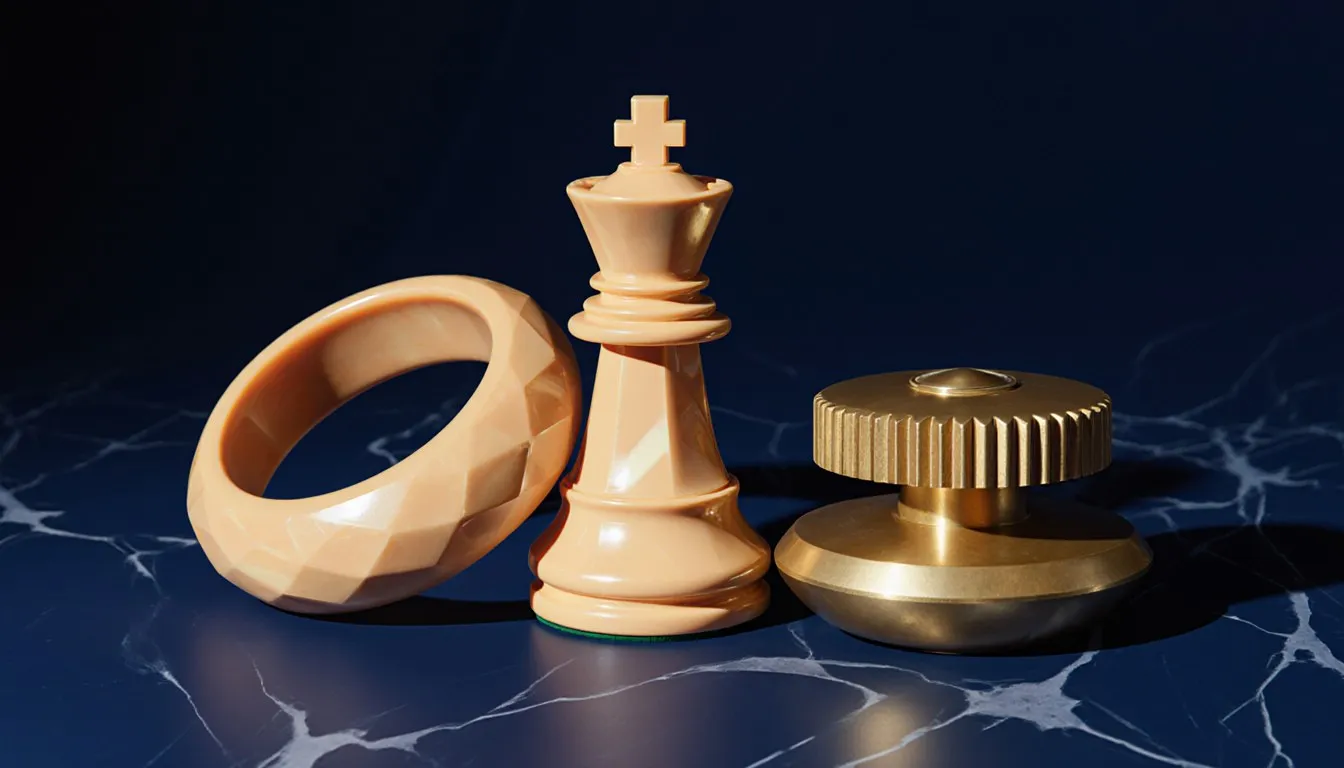
Ever wondered why the plastic Bakelite was used to make those bangles and chess pieces? It is because of the unique properties it possesses. Presented here are the properties and other uses of Bakelite you should know about.
In 1993, the American Chemical Society conferred Bakelite as a National Historical Chemical Landmark, in recognition for being important as the first synthetic plastic that was ever formulated in the world.
Bakelite is a plastic that is used for making many products, ranging from telephones, electrical gadgets, jewelry, to saucepan handles. It has been aptly named as the ‘Material of a Thousand Uses’. The trademark rights for this plastic are owned by a German company called Bakelite AG, in many countries. Let us check out the various properties and uses of Bakelite.
How is Bakelite formed?
Layers of paper or glass cloth are impregnated with synthetic resin. The cloth is also made with cellulose paper, synthetic yarn, cotton, glass fabrics, or unwoven fabrics. Then heat and pressure is applied to it. Because of this, it gets transformed into a thermosetting plastic.
Bakelite Plastic Properties
■ Bakelite is the trade name for phenol formaldehyde resin.
■ Its chemical name is polyoxybenzyl methylene glycol anhydride.
■ It is a thermosetting plastic. A thermosetting plastic is a plastic that liquefies and is malleable when heated. Then it becomes permanently hard and rigid when cooled. Thus, it can be used to make a variety of items.
■ It does not conduct electricity.
■ It is resistant to heat, and is nonflammable.
■ It is also resistant to chemical action.
■ It is the first synthetic plastic that was formulated in the ‘Age of Plastics’. Leo Baekeland is the chemist who developed it in the year 1907, in New York.
■ It is a product of the elimination reaction of phenol with formaldehyde. It is a resin (a substance belonging to a class of solid or semisolid viscous substances, obtained either as exudations from certain plants or prepared by polymerization of simple molecules).
■ The dielectric constant of Bakelite ranges from 4.4 to 5.4.
Uses of Bakelite
Manufacturing Bakelite products has a lot of overheads; it is costly and the process is complex. So, substitutes have been found for it. But earlier, it was used for making various products, like:
■ Saxophone mouthpieces
■ Whistles
■ Cameras
■ Electric guitars
■ Telephone handsets
■ Appliance casings
■ Pipe stems
■ Buttons
Owing to its resistance to heat, electricity, and chemical action, today, Bakelite is used to make:
■ Bases and sockets for light bulbs
■ Vacuum tubes
■ Electrical components
■ Automobile distributor caps and other insulators
■ Insulation of wires, brake pads, and some select automobile parts
■ Jewelry
■ Clocks
■ Radios
■ Toys, and game pieces used in chess, poker, billiards, dominoes, mahjong tiles, checkers, etc.
■ Kitchenware such as canisters, saucepan handles, etc.
Though the usage of Bakelite has decreased over the years, it still proves to be a useful and important material for various processes and items.