

Understanding the Relationship Between Magnetism and Electricity
For many centuries, scientists from various parts of the world have conducted several experiments before they could state the relationship between magnetism and electricity. The article below explains the various concepts related to both these entities.

When an electric charge is in motion, it produces an electric current. Magnetism can be described as lines of force. The relationship between magnetism and electricity was first established by physicist Hans Christian Oersted in the early part of the nineteenth century. He observed that when a magnetic compass needle is placed near a wire that is carrying electric current, the needle get deflected. This showed that electric current produces a magnetic field in the nearby region. The English physicist Michael Faraday went on to explain the relationship between electricity and magnetism further. According to him, if magnetic fields are changed through a loop of wire, then electric current will be produced within the wire.
Relation between Magnetism and Electricity at Atomic Level
- There is a relationship between magnetism and electricity, as both use positive and negative forces.
- Every atom consists of electrons which are negatively-charged particles, protons which are positively charged, and neutrally-charged neutrons.
- Just because these two different charges exist in the atom, the phenomena of magnetism and electricity occurs.
- Electricity, in its static form, is nothing but an imbalance of positive and negative charges.
- When an electron is moving round the nucleus, a loop of electric current is formed. This in turn, results in the formation of a magnetic field within the electrical loop.
- It is believed that this is the basis of the magnetic properties found in different types of materials.
Properties of Electric and Magnetic Fields
Electric field is the area surrounding a charged particle, where if any other charged particle makes an entry, it will experience a force. Magnetic field is the area surrounding a magnet, where apparent magnetic influence can be found. These two fields are interrelated. Noted Scottish physicist and mathematician James Clerk Maxwell derived some equations to explain the relationship between the properties of electric and magnetic fields, as well as their geometric relations involving the circuits. The derivations of his equations are described as follows:
- Any change in an electric field would result in the formation of a magnetic field.
- On the other hand, changing magnetic fields would yield electric fields.
- When an electric field is constant, it does not produce magnetic fields.
- Similarly, a magnetic field with a constant value would never produce any electric field.
- Magnetic monopoles do not have any existence. This means that no magnet can have only a north pole or just a south pole.
- When the electric current is carried in a straight wire, the magnetic field thus produced encloses the wire in a circular manner. In this case, the direction of electric field and magnetic field follows the right hand rule.
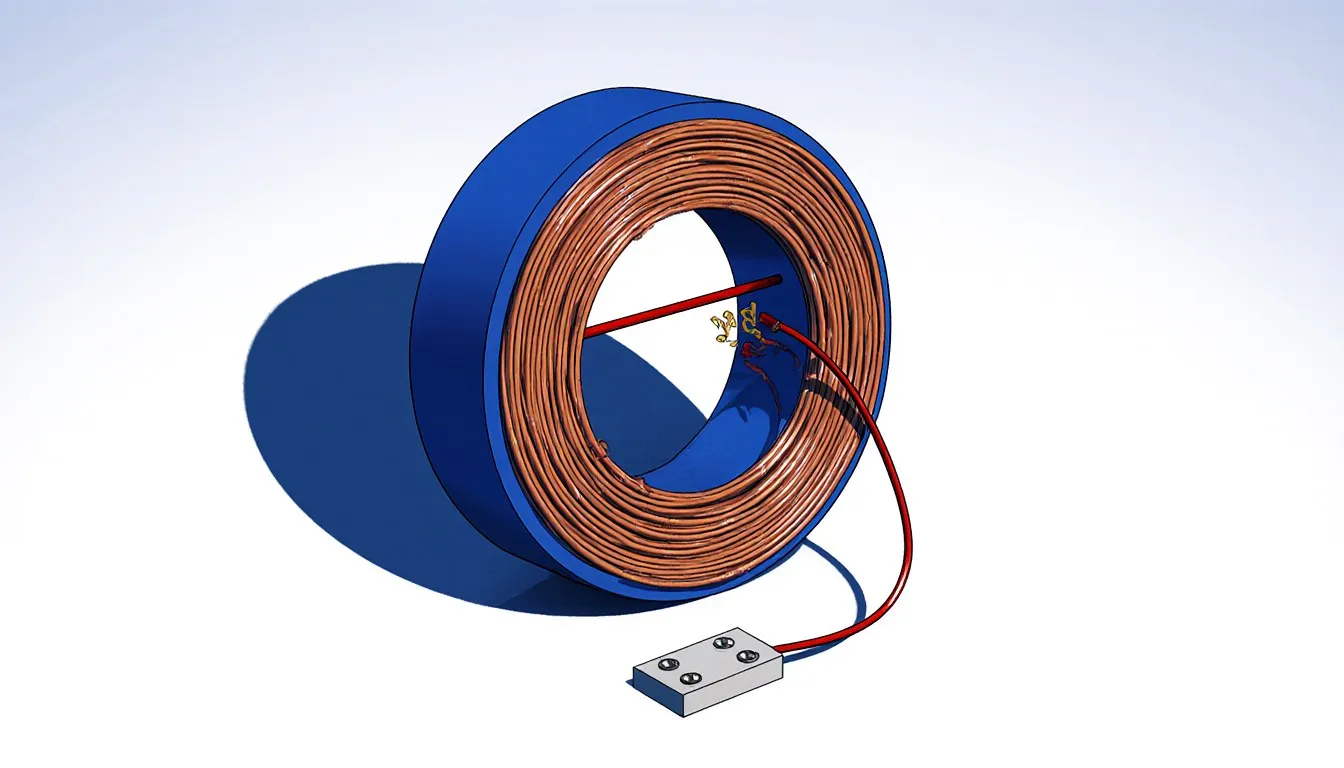
- When the current is carried by a circular wire, the magnetic field produced will be same as the magnetic field of a bar magnet with the presence of a north pole and a south pole.
- If a linear magnetic field is continuously changing, it would produce a circular electric field.
Effects of Electric and Magnetic Field on a Charged Particle
- The amount of force exerted on a charged particle in the presence of an electric and magnetic field was deduced by the Dutch physicist, Hendrik Lorentz.
- According to his equation, if a particle without any charge is placed in an electric field or magnetic field, both the fields will not exert any force on the particle. In case a charged particle in static form is kept in a constant magnetic field, even then the particle would not feel any force.
The relationship between magnetism and electricity is a standalone concept and is applied to several real-life working principle. Phenomena like electricity producing magnetism and the change in magnetic field inducing electricity forms the basis of working principle of various useful appliances.