
Ocean Food Chain Diagram
Do you want to learn how energy transfer takes place in an ocean biome? The ocean food chain diagram and its explanation provided in this article should help you understand the concept.
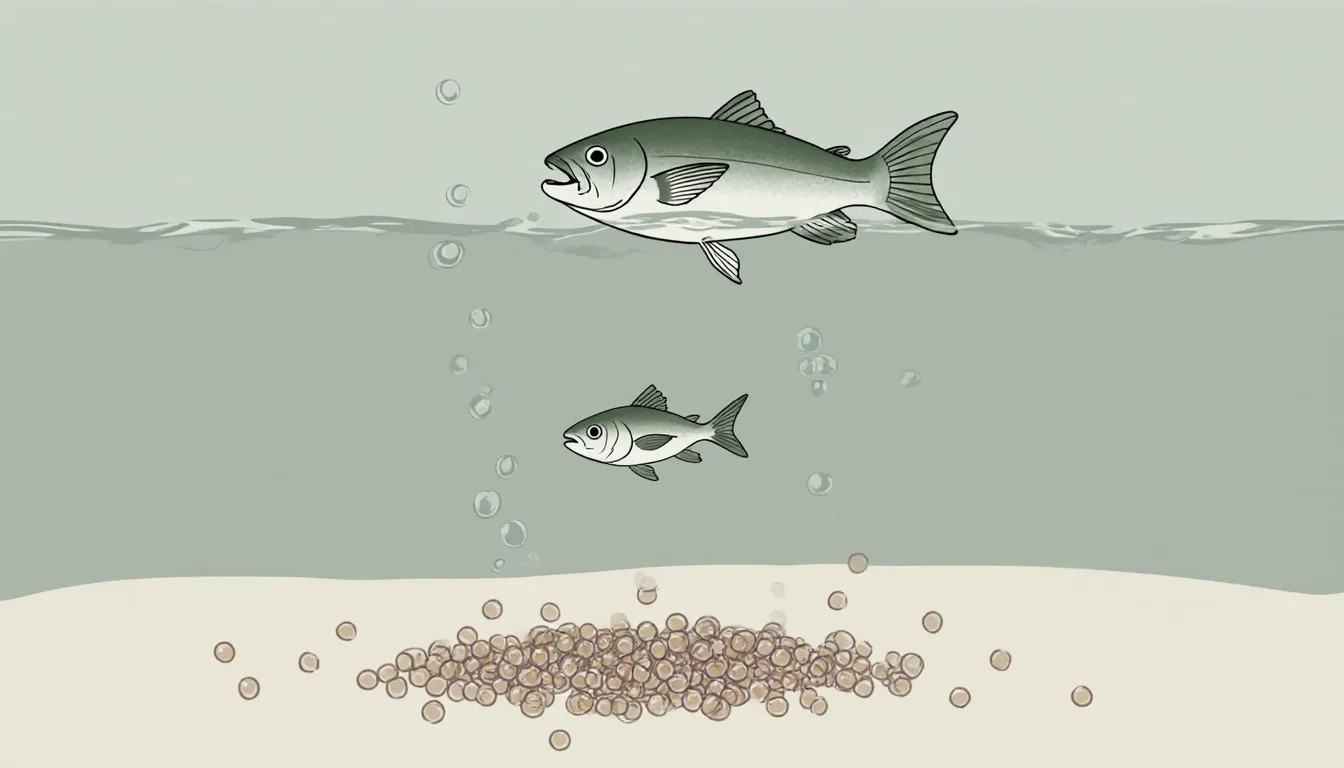
A food chain is a representation of the relationship between producers and consumers, preys and predators within an ecosystem. Every food chain will have at its lowest level primary producers that are responsible and capable of producing their own food. This is true for all ecosystems. These primary producers or autotrophs use solar energy from the sun to produce energy (generally in the form of glucose) by the process of photosynthesis. The autotrophs are eaten by heterotrophs; the energy that the former possess is transferred to the latter. This is the basic way in which transfer of energy takes place. Let’s further delve into the article for more information on the ocean food chain.
Ocean Ecosystem Food Chain
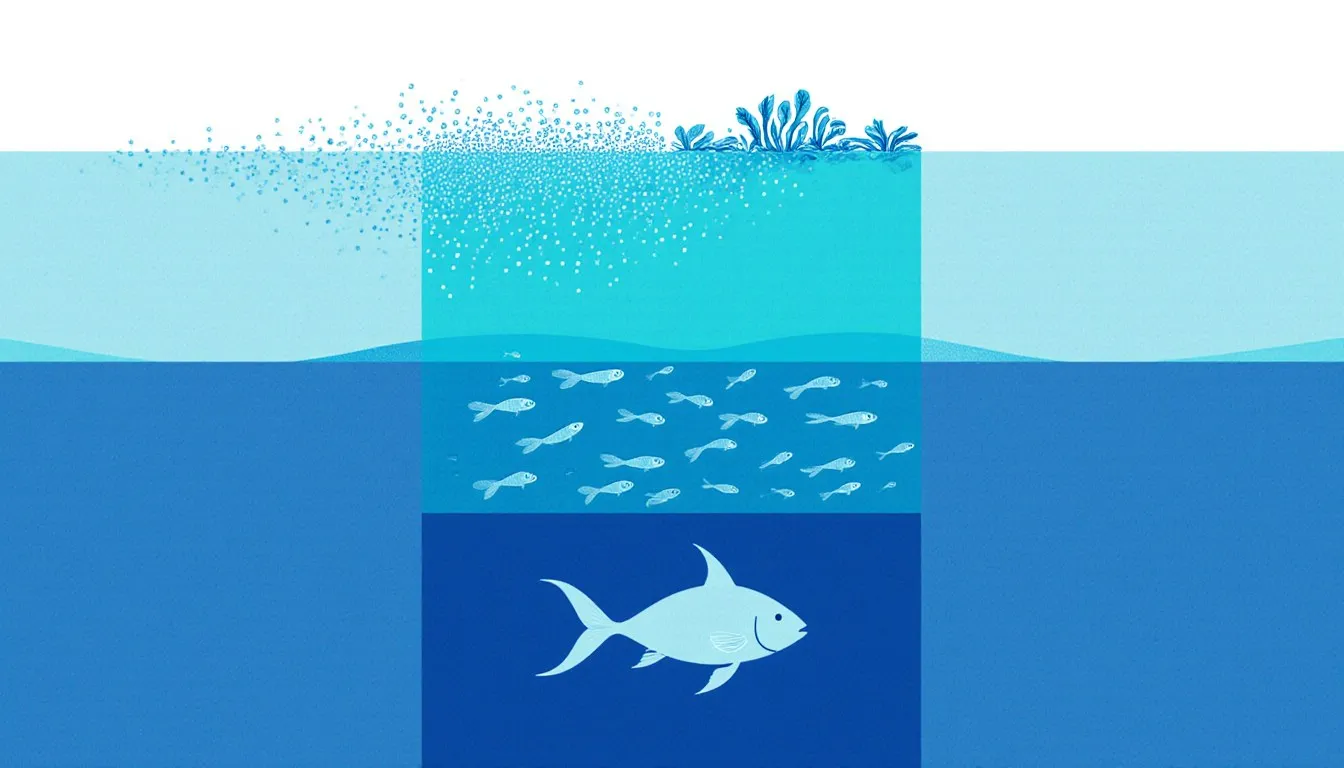
Most food chains are not accurate representations of the transfer of food or energy that takes place in nature, because they are overtly simplistic. No consumer feeds on just one species. The staple for different consumers are made of different plant and animal species, and a simple food chain can never accurately define this relationship. A food web that showcases different interlinked chains is a more accurate representation of the flow of food energy from one organism to the other. If you refer to a diagram, you would see that organisms, that are a part of a food web, are grouped on different trophic levels depending on where they stand in the producer-consumer relationship. So there may be multiple species on one trophic level, that are predators and preys for the same animals. A simplistic food chain of the ocean biomes will consist of phytoplanktons, zooplanktons, primary consumers, and tertiary consumers. This is evident in the diagram complementing this article. The marine biome is the largest in the world, and therefore contributes to intricate food webs. Given below is a diagram of a simplistic food web. Click on the image if you wish to print it out.
Note: In this diagram, we start at the bottom-most level of the food chain with the preys, and the arrows point towards the predators at each level.
The lowest trophic level of an ocean food chain will consist of the primary producers, which in the case of a marine biome would be phytoplanktons. These are single-celled marine plants that live in the surface layers of the ocean, and use the energy from the sun to produce carbohydrates. They do this by converting carbon dioxide and other nutrients using solar energy. Ninety five percent of all food energy at this trophic level is derived from phytoplanktons.
As is evident from the diagram, the next level comprises zooplanktons like shrimp, jellyfish, mollusks, etc., that survive on phytoplanktons. In some cases, larger zooplanktons may feed on the smaller ones. This interchangeability of consumer and producer is why a food chain, reflecting transfer of energy, may not be necessarily accurate.
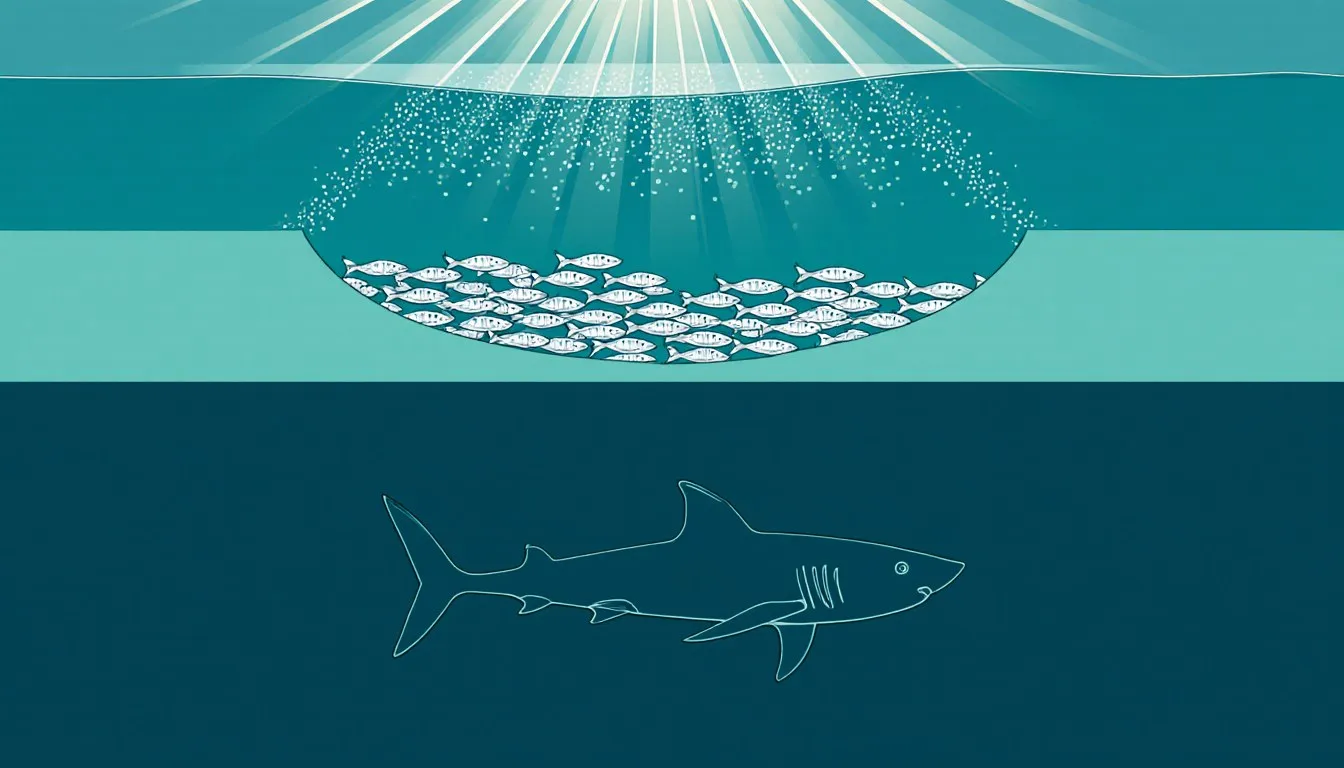
The next trophic level comprises marine animals like smaller fish and crustaceans like sardines, herrings, crabs, and lobsters. These feed on zooplanktons, and are in turn eaten by the next level of consumers as reflected by the diagram. These consumers may include sword fish, tuna, octopus, etc. The last trophic level consists of the predators or tertiary consumers including whales, sharks, etc.
The ocean food chain diagram given in this article only scratches the surface. The food web of the marine biome is way too complex to be reflected in detail here. This is a simple way of understanding how transfer of energy takes place in the marine system, and is a great way of explaining marine biology to kids.