

Function of a Graduated Cylinder
What is a graduated cylinder? What is its function? If you seek answers to these questions, this article will be a helpful read.
One of the first things which you will come to appreciate, when working in chemistry labs, is the need for accuracy in measurements of reactant quantities, used in various experiments. A chemistry lab does tend to look like a glassware factory because of the various measuring instruments and containers that are needed during experimentation. One of the many glass and plastic containers used in such labs is a graduated cylinder.
What is a Graduated Cylinder?
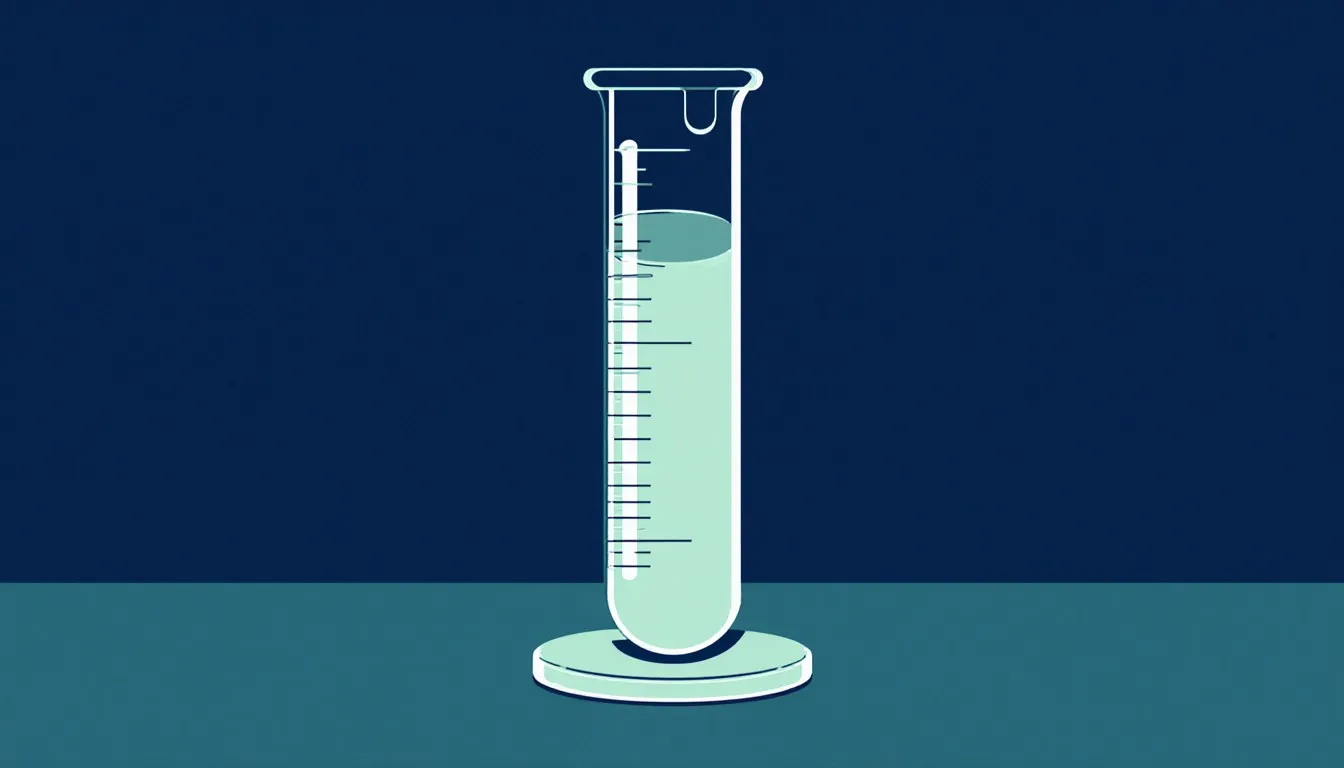
This cylinder is a measuring container, made up of glass or resistive plastic materials with volume units marked on it, along its length. The markings are calibrated according to actual volume measurements, by manufacturers. It is basically a volume measurement vessel with a long and slender cylindrical body and is necessarily transparent, to be able to use it for measurements. They have a stable base below, which allows them to be kept on surfaces, without the need for a stand. These cylinders are generally available in various volume capacities ranging from 5 ml, 25 ml, 50 ml, 100 ml, 250 ml, 500 ml to even more than a liter. Cylinders with varying degrees of gradation are sold.
The markings on the cylinder are graded according to small volume increments and marked with horizontal lines, painted on the surface. Most cylinders are made up of borosilicate glass or polypropylene which can withstand high temperatures and stay unaffected by the corrosive nature of chemicals, which are measured out in them.
Function
Most of the chemicals used in a laboratory are liquid solutions and to ensure that they are used in the right quantities or proportions, they need to be measured out. Function of the cylinder is to measure liquid volumes accurately. They are extensively used in chemistry and biology labs, where quantities of accurately measured liquids need to be used. They are purposely designed to be long, with a shorter diameter compared to beakers, to facilitate accurate measurements. Measurements made with your naked eye, must be made carefully.
How to Read it?
As you will notice, when making liquid measurements with these cylinders, the water surface gets distorted into a concave depression at the surface due to the effects of surface tension. The adhesive forces between the fluid molecules and the walls of the cylinder cause this distortion.
When you observe the fluid level in a cylinder at eye level, ideally, you would make a measurement by matching the fluid level with the closest graded marking on the cylinder. However, since the surface is distorted into a concave shape (known as a ’meniscus’), you need to choose the reading that matches with the bottom of the meniscus. Although, the error in measurement cannot be entirely eliminated, you can lessen it by taking this precaution.
A range of cylinders with different maximum measurement values are a necessary purchase, when setting up a new lab. As mentioned before, it’s essential that you measure the volume of the liquid that’s poured in, according to the line which coincides with the bottom of the meniscus. This ensures that your readings are not distorted by the effect of surface tension, which distorts the surface of the liquid.