

Radial Acceleration
This article gives you important details of radial acceleration, which is one of the two components of angular acceleration, which helps in keeping an object in a circular motion.
Newton’s laws of motion govern the field of physics. The application of these laws define the physical world. Motion is an entity, which denotes the state of change in position or location of an object. It is of two types - linear motion and circular motion. Newton’s second law states that a body of mass ‘m’ subject to a net force ‘F’, undergoes an acceleration ‘a’, that has the same direction as the force, and a magnitude that is directly proportional to the force and inversely proportional to the mass, thus, F = ma. In other words, it gives us the simple definition, which is the rate of change of velocity with respect to time. This is true for linear motion, but what about the rate of change of velocity in circular motion?
Acceleration in Circular Motion
When an object moves in a circular motion, it is said to have angular acceleration. Now, you must be aware of the scalar and vector quantities. Scalar quantities are denoted only by magnitude, while on the other hand, vector quantities have both magnitude and direction. In linear motion, the acceleration component has the same direction as the force applied, which is the direction in which the object is traveling. On the other hand, in circular motion, the direction of the object is constantly changing, which can be prompting a change in its magnitude and direction, in case of non-uniform circular motion, or only in direction, in case of uniform circular motion. So, the direction of the angular rate of change of velocity, changes constantly. It is nothing but the rate of change of angular velocity with respect to time. There are two components for this vector, namely, radial and tangential.
Radial Component
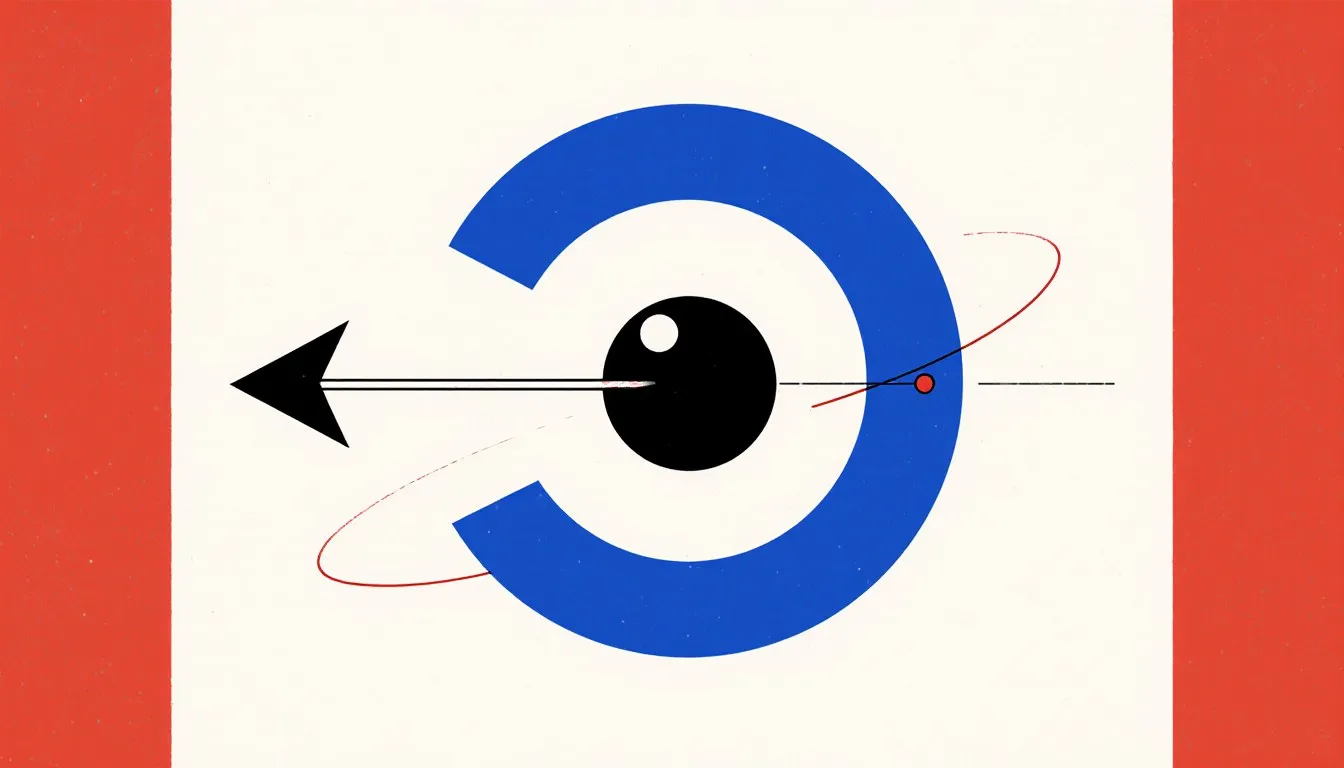
Radial acceleration ‘ar’ is the component of angular rate of change of velocity, whose direction is towards the center of the circle. This is also known as centripetal rate of change of velocity, which is present due to the centripetal force (directing towards the center of the circle), acting on the object. Mathematically, it is the square of velocity ‘v’ of the object, divided by the radius of the circle ‘r’. So, its formula is ar = v2/r. It is actually the centripetal acceleration which is radially inwards. The units of measurement are denoted by radians per second squared or simply meters per second squared. Symbolically, it is written as ω/s2 or m/s2.
For instance, imagine you are on a simple merry-go-round. The direction of the velocity vector taken from your position will be tangential to the circular path in which the merry-go-round is traveling. However, the centripetal acceleration pointing radially inwards towards the center is what makes you go round. And from the formula, we can see that the greater the radius of the circle of rotation, the lesser is its rate of change of velocity and vice-versa. That’s the reason why we see that the smaller merry-go-rounds move a lot faster than the big ones. Simply put, the radial component is the primary reason for any object to keep traveling in a circular motion.
Tangential Component
The component of angular acceleration tangential to the circular path is the tangential component. For instance, in a discus throw competition, when you fling the disc after one or two rotations, the disc travels along the tangential path of your hand’s circular rotations due to the tangential component. Mathematically, it is at = (v2-v1)/t, where v2 and v1 are the respective velocities of the object in circular motion at two points measured over a time period t. Its unit of measurement is m/s2.
Radial Acceleration of the Earth
As we all know, the Earth revolves around the Sun in a slightly elliptical orbit. So, we cannot be exact in terms of finding the radial acceleration of the Earth, as there are a lot of forces acting on the Earth in the larger sense of the term. Let’s assume all the standard values known to us, to find it out. We know that the Earth’s velocity around the Sun is about 29.8 km/s, which if converted in SI units comes to 29800 m/s. The radius of the Earth’s orbit, which is the distance between the Earth and the Sun is about 149.6 million km = 149600000000 m. So, applying the formula we know, radial component is are = v2/r = (29800)2/149600000000 = 0.00593 m/s2. This is the value of the radial component which keeps us orbiting around the Sun.
I hope I have cleared all the doubts regarding your understanding of radial acceleration in circular motion. So, the next time you are in a merry-go-round, remember that it is this component, present due to the centripetal force, that is helping to keep you from flying away.
The pull that keeps the Earth curving around the Sun instead of flying off in a straight line is motion forces and simple machines at their largest scale.