


How are Earthquakes Detected?
Why do earthquakes occur? How are they detected? Read on to find the answers.

What Causes an Earthquake and How Is It Detected?
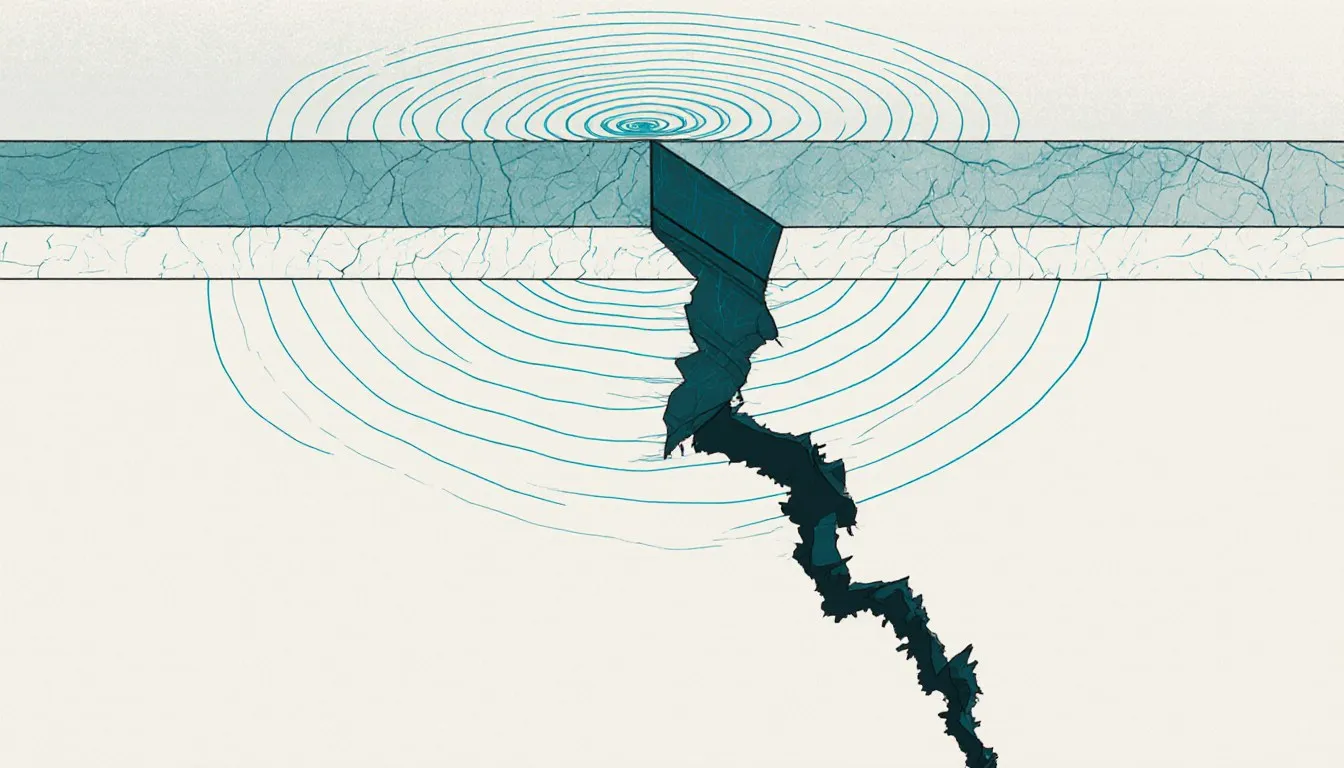
An earthquake, one of the most dreaded natural disasters, is technically a seismic event that generates seismic waves causing the ground to vibrate. How does an earthquake occur? An earthquake occurs as a result of a sudden release of energy in the Earth’s crust creating seismic waves. We all are aware of the fact that high-intensity earthquakes can result in a massive destruction of life and property. But how are earthquakes detected? Here is how.
Earthquakes are detected using a seismometer. A seismometer, also known as a seismograph, is an instrument that records movements of the ground. It is used to detect seismic waves generated by earthquakes and nuclear explosions. A seismoscope can also be used for the detection of underground movements. It indicates that motion has occurred, but does not give a continuous record of the ground movements.
How Seismometers and Modern Devices Detect Quakes
A seismometer consists of an inertial mass that moves in relation to the instrument frame and a method to measure the motion of the mass in relation to the frame. Ground motion causes the instrument frame to move. The motion between the frame and the mass is measured in order to detect and record the ground movements. Modern seismometers consist of a negative feedback loop that applies a magnetic or electrostatic field to resist the motion of the inertial mass. The seismometer outputs the voltage equivalent of the force required to resist the motion of the mass.
The advancements in technology have led to the creation of modern earthquake-detecting instruments, which use electronic sensors and amplifiers. They cover a broad frequency range. Devices of the modern times are highly sensitive to ground movements. Teleseismometers, which cover a wide range of frequencies, and strong-motion seismometers using the digital technology, are some of the latest instruments used to detect earthquakes.
Why Earthquake Detection Matters
Earthquake detection systems can only help us forewarn of a possible earthquake by enabling early detection and near-accurate measurement of its intensity.