
Intermediate Directions: Meaning and Examples
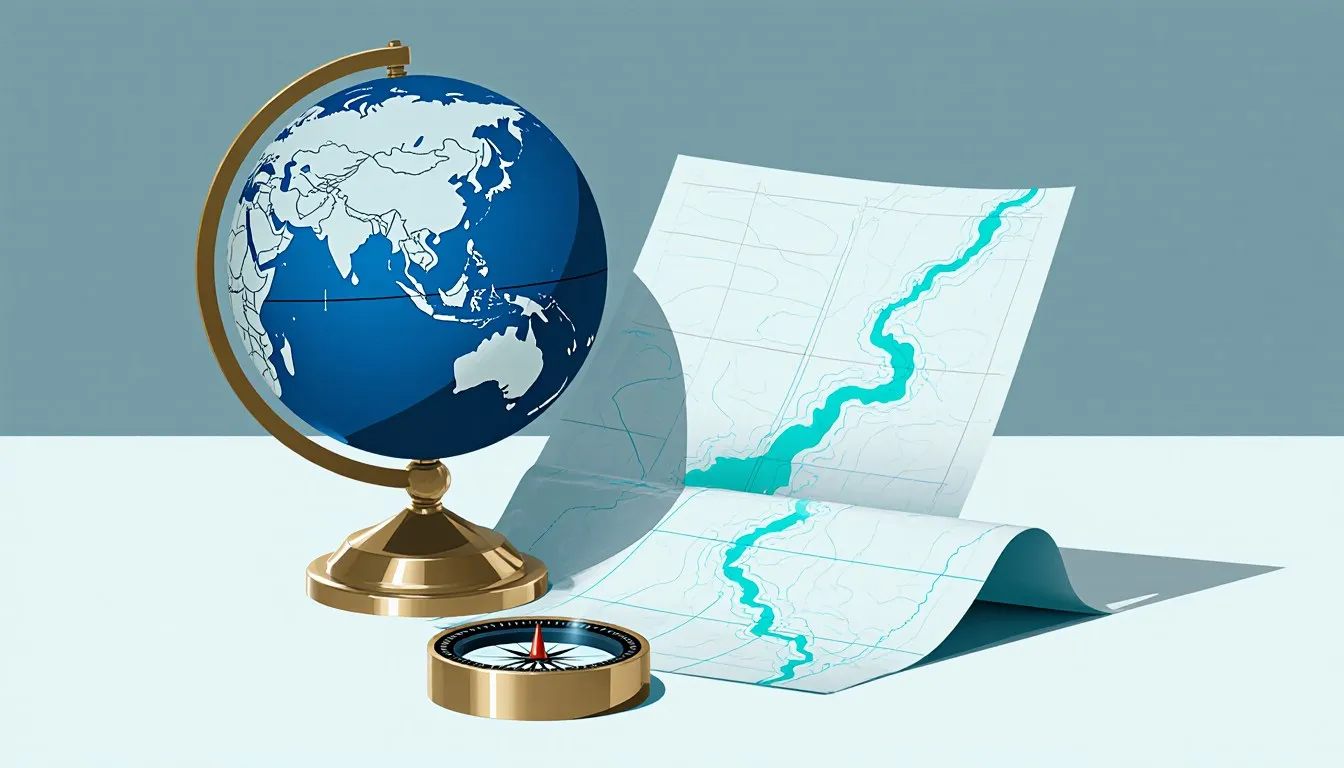
Interested in knowing how to get to a destination by reading a compass? Then you definitely should know the definition of intermediate directions. Once you understand what is what, you can set off on a trip with your compass and your map, without getting lost.
The origins!
Records specify that the Chinese started using magnetic compasses by 1100 A.D., Western Europeans and Arabs by 1200 A.D., and Scandinavians by 1300 A.D.
What was your first thought when you saw a compass, maybe in movies or at home? ‘Fascinating’ I think is the word! You might have wanted one for yourself at some point of your life, seeing the sailors use it for directions in the sea or in jungle safaris in movies. I bet you might have included a compass as a part of your treasure hunt story games as kids.
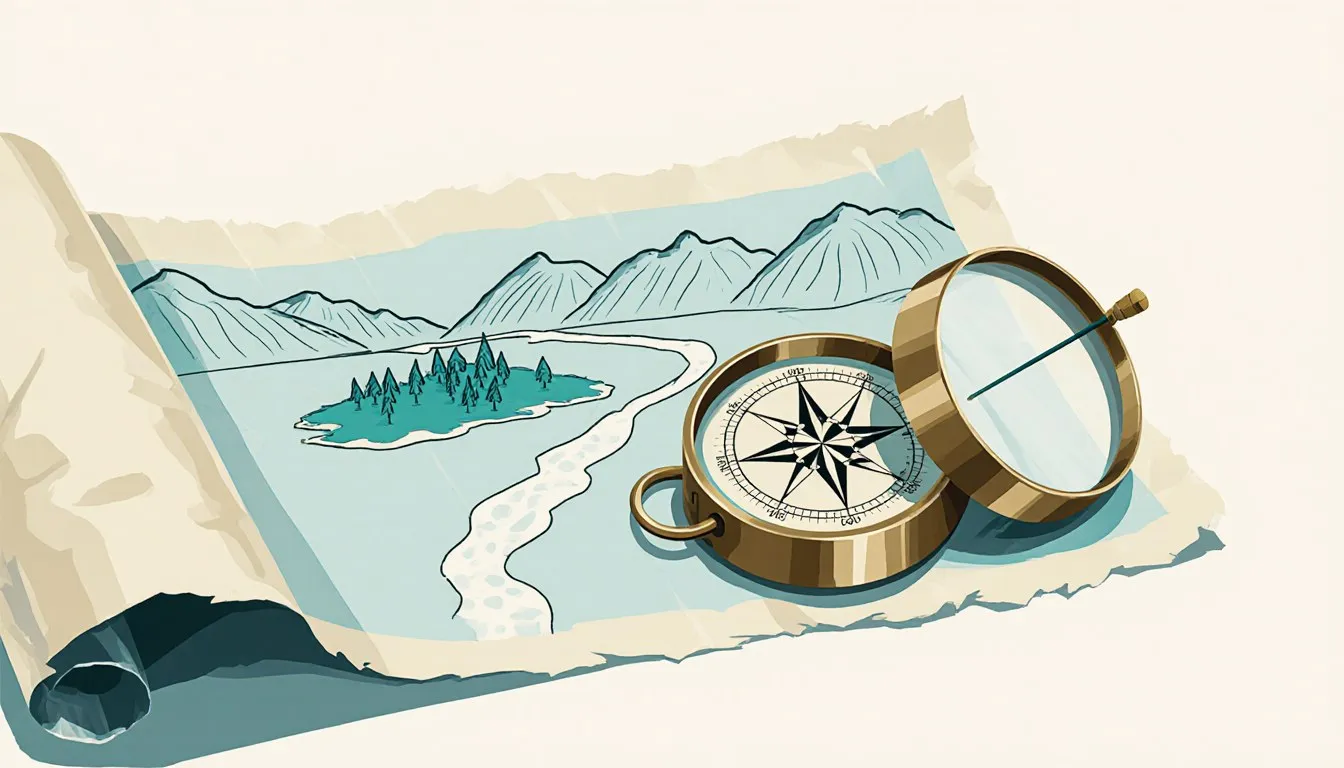
Also when we see a map, we see the primary directions, viz., North, South, East, and West, at the right corner with a compass rose also known as wind rose, which might have just N written for North, or the initials for all the directions.
If you are wondering what a compass rose is, it is a diagram labeled to show directions. Why is it called rose? Because in some compasses it points the intermediate directions as well, giving it the shape similar to a flower. And what are these intermediate directions? We’ll tell you that in detail as you scroll down further. Oh, and you will also find an interesting treasure map to solve your way to the treasure box!
Meaning
The four primary directions North, East, West, and South are shown on the compass as N, E, S, W. These primary directions are called cardinal directions. The directions in between these cardinal directions equidistant from them, are called intermediate directions, also known as ordinal directions or primary intercardinal directions. The directions are North-East, South-East, South-West, North-West, shown on the compass as NE, SE, SW, NW. Some compasses have additional sub-divisions, North-Northeast (NNE), East-Northeast (ENE), East-Southeast (ESE), South-Southeast (SSE), South-Southwest (SSW), West-Southwest (WSW), West-Northwest (WNW), North-Northwest (NNW). These directions are called secondary intercardinal directions.
Construction
The compass is divided into four quadrants, N, E, S, W. North and South are at 180° from each other, starting from North at 0°. East and West are at 180° from each other, starting from East at 90°. From North, exactly 90° clockwise is East. Directly opposite to East is West. The position of NE is half-way from North to East. Likewise SE, SW, NW are at 45° from the cardinal points. The sub-divisions NNE is halfway from N to NE, at 22.5°.
Primary directions fall at these degrees on the compass
North (N): 0° = 360°
East (E): 90°
South (S): 180°
West (W): 270°
Intermediate directions fall at these degrees on the compass
Northeast (NE), 45°
Southeast (SE), 135°
Southwest (SW), 225°
Northwest (NW), 315°
Here is an adventurous journey of a pirate in search of gold. Would you help him find his way through this island? Just give him the directions and he will follow you. The way is traced out in the map, but entering such a big island with no technology, he only has a compass to reach his booty!
- In which direction should he move in order to reach the stream, from where he can enter the island?
- He has entered, but needs to stick to the stream, so he doesn’t get lost in the island. Which intermediate direction should he follow?
- After a long journey, the pirate is now thirsty and hungry. He sees some trees on the map, and wonders if he can find something to eat there. In which intermediate direction should he head?
- Also he sees a dense forest on the map right ahead of the stream, but doesn’t want to take the risk of entering it, fearing the possibility of encountering a dangerous animal or a group of cannibals! Which intermediate direction should he not go to avoid the forests?
- Having reached the right patch of trees and eating to his hearts delight, he now sees a way through the mountains on the map. Which intermediate direction should he follow?
- He finally sees the mountains. In which intermediate direction should he head to go round the mountain?
- He has almost reached the end of the mountain area. Where exactly is the treasure box?
Answers:
- West
- North-East
- North-West
- North-East
- North and then North-East
- East
- South-East
Hope the above example gives you a better understanding of intermediate directions and its utility.
Reading intermediate directions such as northeast and southwest is a small piece of many human geography concepts, the same skill that turns a compass and a map into a way of understanding a place.