


Where Do Penguins Live? Habitat, Range, and Species
Penguins live only in the Southern Hemisphere, from Antarctica north to the Galápagos Islands, on coasts and islands cooled by ocean currents and free of land predators.
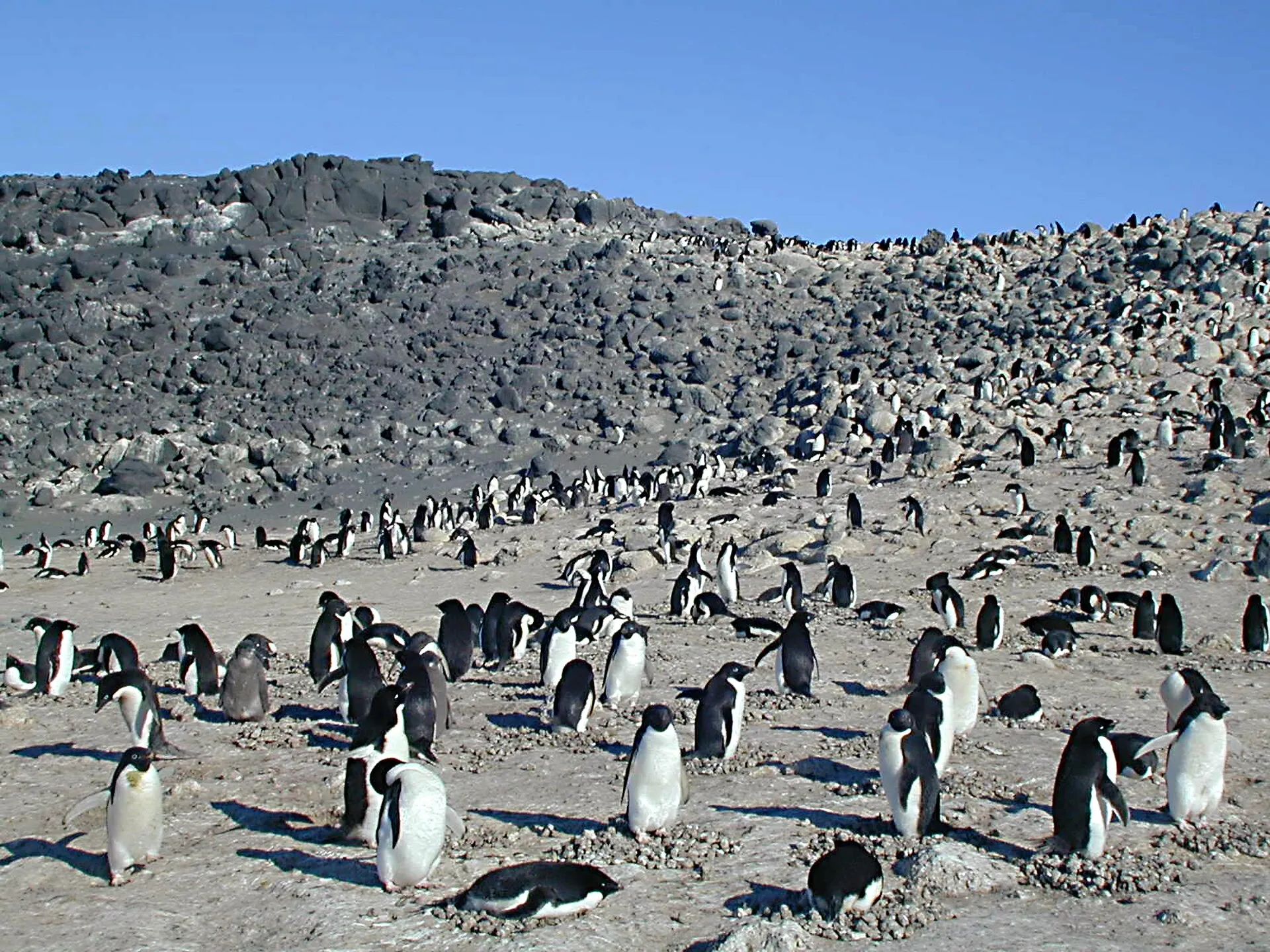
There are no penguins in the Northern Hemisphere, and only a few of the roughly 17 species live far south in Antarctica. At least ten live in the temperate zone, on coasts and islands that cold currents keep cool and land predators have never reached.
| Where | Notes |
| Antarctica | Home of the emperor penguin, the largest species |
| New Zealand and Australia | Temperate coasts and offshore islands |
| South Africa and South America | Coasts washed by cold currents |
| Galápagos Islands | The northern limit, reached only because the Humboldt current keeps the water cold |
Penguins are aquatic, flightless birds that are counter-shaded black and white. There are different types of penguins. Currently, around seventeen different species exist, of which the Emperor penguin is the largest one. There are many myths and much ignorance surrounding these flightless birds. Many people are not even sure where they live. Given below are details regarding penguins’ habitat and how they are suited to stay in that particular environment.
Where Do Penguins Live and How?
One of the biggest myths of all time is that penguins need to live on ice. They need to live near water bodies because they spend most of their time in the water. This is because they are flightless birds, but they more than make up for their lack of flight by their swimming skills. In fact, they can swim up to a hundred kilometers without resting. Thus, penguins prefer to live on islands and remote continental regions that are free from land predators so that their inability to fly does not work against them.
Although all penguins are originally native to the southern hemisphere, they are not found in only cold climates. Only a few actually live far south in Antarctica. At least ten species live in the temperate zone, of which the Galápagos penguin lives as far north as the Galápagos Islands. However, this is only possible due to the cold, rich water that comes from the Antarctic Humboldt current. Major populations are found in places such as Antarctica, Australia, New Zealand, South Africa, and South America. There are no penguins in the Northern hemisphere.
The main species that lives in Antarctica is the Emperor penguin. It is well-suited to deal with extreme cold due to many features. It has a thick layer of insulating feathers which helps it to stay warm even when it swims in icy cold water. This is especially helpful because there tends to be more heat loss in water as compared to air. The Emperor penguin also has the largest body mass compared to all the other species, which thus, further reduces the surface area for heat loss. It also regulates the blood flow to its extremities, thus reducing the possibility of freezing its blood. Furthermore, male Emperor penguins huddle together to keep warm and also rotate positions to make sure that each one gets a turn at being on the cold side.
On the contrary, rather than getting cold, it is a problem to stay cold once out of water that bothers penguins. For this reason, they often hold their flippers out so as to radiate heat. They also make their feathers stand up to flush out some of the warm air that may be trapped within. Certain types of penguins even have bare patches present on the face which helps to radiate heat.
Can Penguins Survive in a Warm Climate?
Penguins can live in warm climates, provided the water body present in that region is cold. However, certain species that are suited to cold climates cannot survive in warm climates. However, if a cold climate penguin is born in a warm climate, it might be possible but due to the acclimatization problems, it wouldn’t survive for long.
Penguins do not need to stay only in snowy and icy regions. In fact, they do not stay in the Northern Hemisphere probably because Polar bears do. They are endangered animals and there are quite a few species that are already extinct. So it is best to try and learn as much as possible about their habitat to ensure that it is not threatened.