



How to Give Oral Medication to a Bird
Birds can make amazing pets. However, handling them and taking care of their health, especially administering medication, can get challenging. This BirdEden article is an easy guide on how to give oral medications to a bird.
Did You Know?
The normal body temperature of a bird is 104 to 105 degrees Fahrenheit.
The last time my pet bird fell ill, I had a hard time. The vet prescribed medicines which had to be fed through food and water every day. This perhaps was the most stressful time both for the bird and me, since birds cannot be given pills (good news); however, they still have to administered medication (bad news)! So, handling the bird, while making sure I feed it the right dosage, was no less than a test. The normal body temperature of a bird is 104 to 105 degrees Fahrenheit.
Administering medication to a bird can be frightening. If it is not administered or fed properly, it may enter the nasal track and cause complications. What is the right way to hold the bird without causing much distress? What if the bird damages the syringe, or does not swallow the medicine? So many questions, and I am sure, most of you have plenty to add to this list. So, finally, I decided to find out what was the safest and easiest way to administer medication to birds. Interestingly, with a little care and precaution, here is how it should be done.
Feeding Oral Medication to a Bird
Preparation
➙ Ask the vet about the time, frequency, and dosage of medication to be administered. Ask if there are any potential side effects, and how should you prepare for the same.➙ Shake the medicine before use, and follow any other instruction given by the vet. Use a syringe to feed the medication. Draw medicine into the syringe immediately after you shake it.
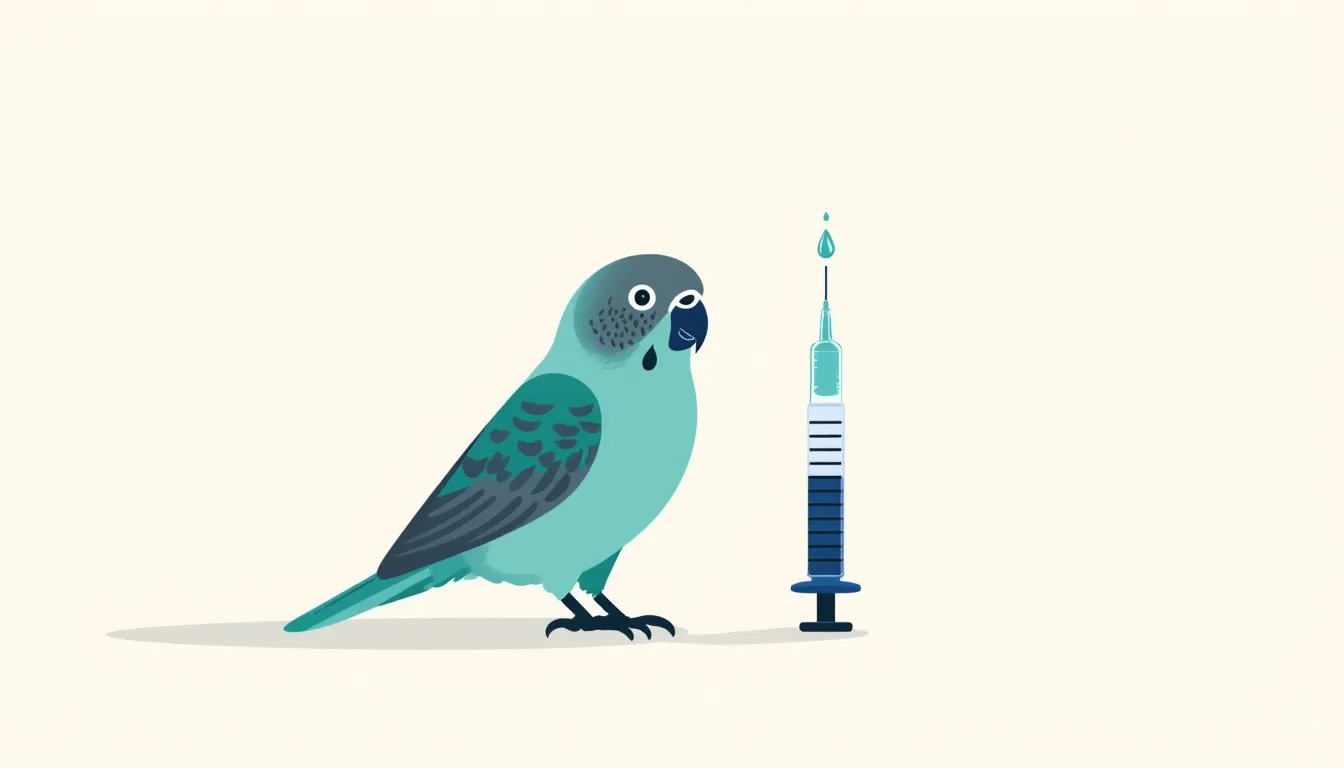
➙ Now, draw the recommended dose from the bottle. (Remember, the syringe should not have the needle on it!)
➙ If you see any trapped air bubbles, lightly flick the syringe to get rid of them. It is advisable to use a small syringe, as it is easier to handle, plus the dosage readings will be easy to understand and measure.
Administration
➙ As discussed above, the first time is always going to be a little difficult. But understanding a few techniques and what suits your bird the most can help. Know that each bird is different, so one universal method may not be of help for some. You will have to observe and probably make changes accordingly.➙ As you get master the skill of feeding medication, the bird will also polish its escaping skills. So be prepared. Most importantly, do not lose your cool.
➙ Choose a place in which your comfortable with feeding medication. Make sure there are no major obstacles that may cause injury or pain when feeding the bird.
➙ Hold the bird in a towel, this will provide a better grip too. Make sure the fabric of the towel has just enough friction, and the birds claws do not get stuck in it. Make sure the cloth is perfectly, yet gently, wrapped around the bird. The bird should be able to breathe well, so do not wrap it very tightly. Use you hands and fingers to get a comfortable grip of the bird in the towel, or manipulate his head or beak. Ensure that the bird does not feel too warm or hot, and can breathe easily.
➙ If you want, you can hold the bird without the towel. You will need to place your palm on either side of the bird. Place you thumb on the side of the bird closest to you, like the cheeks, chest or the beak. Now place your index finger below the chest or the beak, on the side that is away from you. Wrap your fingers around the bird for a comfortable grip.
➙ One can also administer the medicine to the bird while in the cage. So, if you are lucky, you will simply have to manipulate the head of the bird, with your fingers, to open its beak.
➙ Hold the syringe on the left side of the bird’s beak. It should be pointed inside, towards the right side of the bird’s throat. Only the tip of the syringe should be inside the bird’s mouth. Now slowly inject the medicine into the bird’s mouth.
➙ If the bird is readily drinking it, continue injecting with an even pressure. If the bird hesitates, go slow, allow it to gulp down the initial drops, and then start again.
After Care
➙ Wipe the bird well after feeding him the medicine. Use a soft cloth dipped in warm water, gently wipe its feathers and the beak.➙ Comfort the bird. Most birds get stressed with the whole procedure of medication. So give it some warmth, and let it relax. Spend time with your bird. Talk or play with it. You may also consider offering it a treat.
Important tips
➙ Birds do not have a diaphragm, they simply rely on the expansion and fall of their chest to breathe. When you hold the bird, make sure the grip is not too tight.➙ You will need to use of fingers and hands to move its head and beak if your bird gets uncomfortable. You can also use the syringe to force open its beak if it refuses to open it.
➙ Make sure that your bird is swallowing the liquid. Do not inject all the medicine in the syringe at once. If the bird is taking time to swallow, stop squeezing and start again only when it has swallowed some.
➙ Injecting or feeding too quickly may cause the bird to choke, the medicine may spill out of its beak or, even worse, cause difficulty in breathing.
➙ You could also lift the bird’s upper mandible, to help open its beak. Also if, the bird’s head is slightly lifted, swallowing becomes easier, and the bird will not spit out the medicine.
In most cases, the bird will drink the medicine without major hassles. But, for any other confusion, and if medication is causing both, you and the bird a lot of discomfort and stress, consider visiting a vet. Every bird has a unique temperament. You will know what suits your bird the best.